General Topics · 裸體的威威 · 5 分鐘閱讀
Contours of Quiet Strength 116
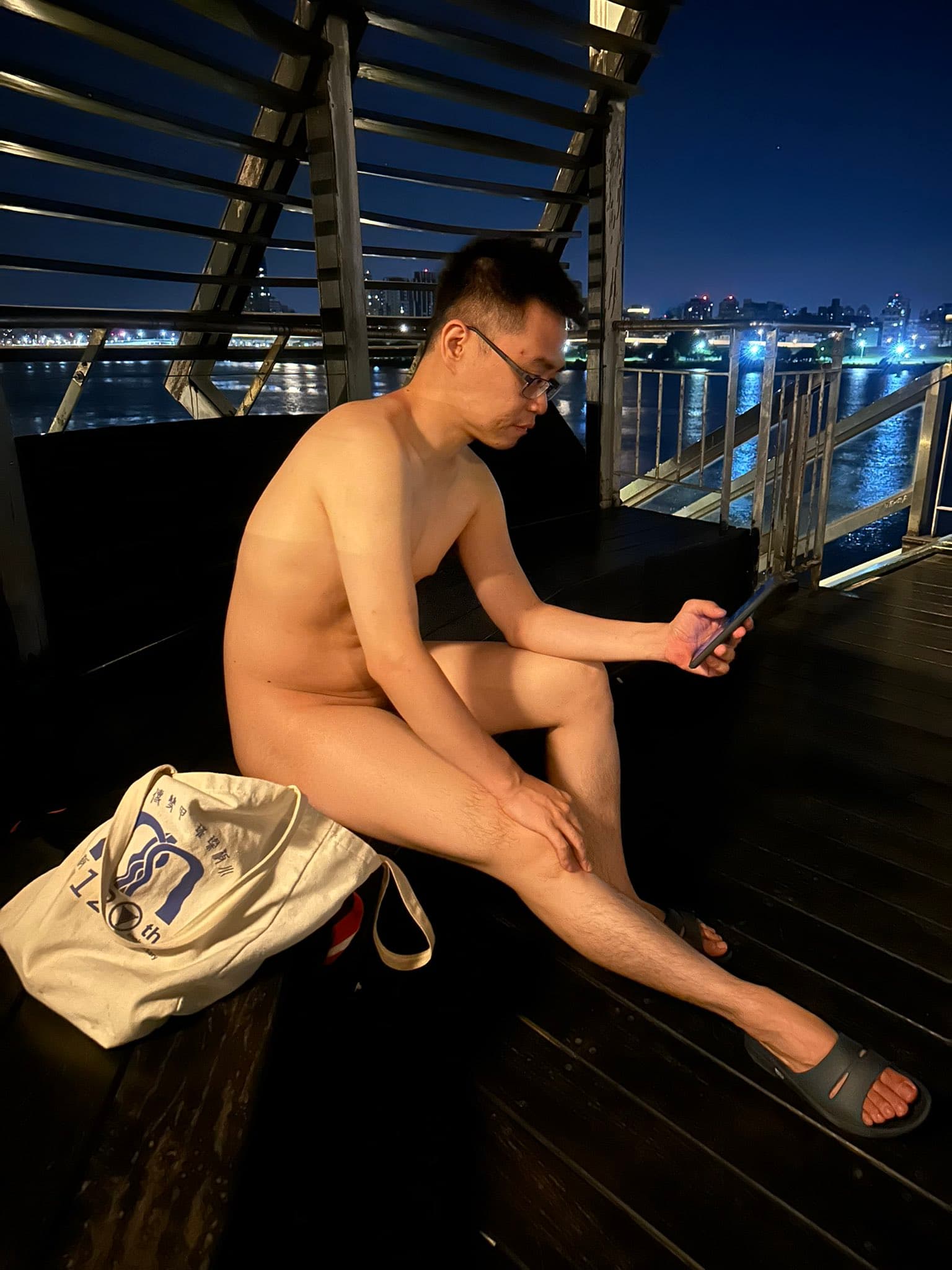
A quiet, unguarded frame from the Contours of Quiet Strength series — on stillness, consent in nude photography, and learning to look at your own reflection without flinching.
Contours of Quiet Strength 116
There's a frame in this set where almost nothing happens. A body at rest, turned slightly away, one knee drawn up and an arm folded over it. The light comes in low from the left and stops about halfway across the back. That's it. No gesture, no drama, no clever angle.
I've looked at it more times than I can count, and it still does something to me. So let me try to say why.
What the frame holds
The line from the shoulder down to the hip is the whole composition. It's a slow line. The kind your eye follows without being told to. There's a soft crease where the ribcage meets the waist, a shadow pooling in the small of the back, and just enough light on the outer thigh to keep the shape from dissolving into black.
I shot this on a grey afternoon in a room with one window and no blinds worth mentioning. The radiator clicked the whole time. My model had asked for the music off, which I've learned to say yes to without asking why. Silence changes how someone holds their shoulders. It takes about ten minutes for the body to stop performing and start simply existing in the space. That's the moment I wait for. Frame 116 is from that window.
Strength that doesn't announce itself
We have a very narrow picture of what a strong body looks like. Usually it's mid-effort — mid-lift, mid-run, jaw set, muscles switched on. I love those photographs. But they're only one kind of truth.
The strength I keep coming back to is the strength of staying. Of a person who has decided to be seen and then simply does it, without flinching, without apologizing for the soft parts. That takes something. Anyone who has stood in front of a camera with nothing to hide behind knows exactly how much.
In this frame, the strength is in the stillness. The body isn't proving anything. It's just there, and it's enough, and the light agrees.
Why I number them
People ask about the numbers sometimes. 116 doesn't mean anything grand. It means I've kept going.
When I started this series I had a vague idea about documenting bodies honestly — different shapes, different ages, different relationships with being looked at. What I didn't expect was how much the archive itself would become the point. Some days the light is extraordinary and the pose is right and the photograph is easy. Most days it isn't. Most days you get one usable frame out of ninety and you're tired and the radiator is still clicking.
116 is a record of showing up. That's the quiet part of the title. Not loud strength. Not the kind you can photograph in a gym mirror. The kind that accumulates.
Consent is the composition
I want to be specific here, because this is the part that gets skipped in conversations about nude photography.
The image in this set is the unguarded version — the full frame, nothing cropped out to make it easier to look at. That's a choice my model made with me, in advance, in plain language. We talked about where the photographs would go, who would see them, and what would happen if either of us changed our mind. That conversation is not paperwork before the real work. It is the real work. A tense model makes a tense photograph, and you can always tell.
So the softness you see is not the absence of care. It's what care looks like when it's done properly.
What I see now that I didn't see then
When I made this frame I was looking at the light. That's all. Technically, I was chasing a falloff — how quickly the highlight on the shoulder gives way to shadow along the spine — and I got it, more or less.
Years later I look at it and I see the belly. Soft, unretouched, sitting the way a belly sits when its owner has stopped holding their breath. I see a small scar on the hip that I never asked about and never edited out. I see a hand relaxed enough that the fingers have gone slightly slack.
I spent a long time not liking my own reflection. Most people I photograph have spent some time there too. It's the most common thing in the world and almost nobody says it out loud. Photographs like this one are my way of saying it out loud.
If you flinch at your own reflection
I'm not going to tell you to love your body tomorrow. That's not how it worked for me, and I don't trust anyone who claims it happened overnight.
What helped was smaller than that. Standing still in front of a mirror for two minutes, in bad light, without fixing my posture. Looking at a photograph of myself taken by someone kind, and noticing what my eye went to first — the flaw I'd been carrying around for twenty years, or the actual shape of me.
You can practice being seen. It's a skill, not a personality trait. Start with yourself, in a room where nobody's watching, and go slowly.
Thank you for being here
This series has run long enough that it's become a habit of attention, and I'm grateful for everyone who's walked through it with me — the models who trusted the process, and the readers who look at these frames the way they're meant to be looked at: with curiosity and a bit of tenderness.
The full set of Contours of Quiet Strength 116 is on the blog, along with the rest of the archive. If one of these frames makes you look a little more kindly at the person in your own mirror, then the whole thing was worth doing.
Come find me at nakedwill.com. Say hello. Tell me which frame stayed with you.
Nakedwill — nudity as authenticity.