General Topics · 裸體的威威 · 5 分鐘閱讀
Two Edits of the Same Afternoon: Why I Keep a SFW and an NSFW Version of the Same Video
Same afternoon, two edits. Why I publish a SFW cut and keep an NSFW one — and why the line between them is about context and consent, not shame.
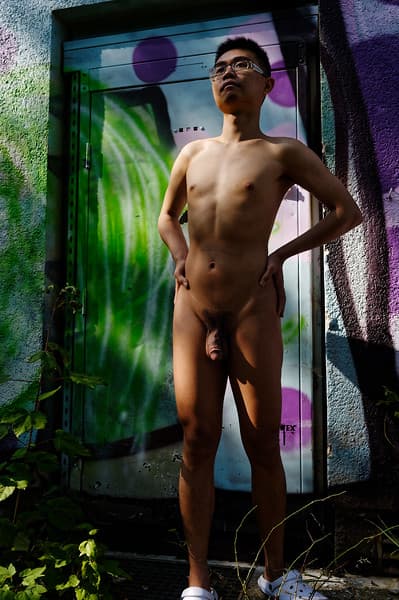
Two Edits of the Same Afternoon: Why I Keep a SFW and an NSFW Version of the Same Video
My camera stamps the date and time into every file it writes. The clip I'm talking about came out as 20260822153123648 — 22 August, 15:31, and a long string of digits so that no two recordings ever collide. The letters in front of those numbers are mine. I added them myself, in the file name, months ago, and I've never taken them off.
There's a second file with the same digits. It lives in a different folder. It has no prefix at all.
What's actually different between the two
Less than you'd think, and more than you'd expect.
The same afternoon light is in both. Same wind pushing my hair across my face and ruining the shot twice. Same moment where I laugh because a fly lands somewhere inconvenient and I lose the whole take.
The SFW cut keeps the wide frames. It keeps the part where I'm sitting on a rock with my knees up, watching the water, the whole landscape doing most of the work. It keeps the walk back along the path in the last of the sun. What it doesn't keep is the closer frames — the ones where the camera is near enough that my body is the subject and not the scenery.
That's the whole difference. Distance, and what the frame is pointing at.
I stopped calling it "the safe one"
For a while I did. "Here's the safe version," I'd write, and then send people the other one privately. I stopped because the word was doing something I didn't want it to do.
Calling one version safe implies the other is dangerous. Nudity isn't a hazard. A body on a screen is not a spill you have to mop up before guests arrive. When I used that word, I was quietly agreeing with the people who think my afternoon on a rock needs a warning label.
So now I say SFW and NSFW, which are just descriptions of where a thing is allowed to sit, not judgments about whether it's good. A bonfire is not dangerous. A bonfire in a dry field is. Same fire, different field.
The line isn't shame. It's context.
Here's what I've come to believe after three years of making both versions of almost everything.
The reason I keep an SFW cut has nothing to do with being embarrassed by my body. It has to do with who else is in the room.
Someone scrolling on a train. A person at a desk with a colleague walking past. A nineteen-year-old who is curious about naturism and wants to see whether it looks like something they could try, without their phone suddenly becoming a situation. A parent whose kid grabs the screen.
None of those people are offended by a body. They're just in a place where attention isn't invited, and I'd rather be a guest who notices that.
That's the whole ethics of it, for me. Not "hide it, it's shameful." Just: read the room. Consent isn't only about touch. It's also about what you put in front of someone who didn't ask.
And the other version? It's not what you think either
People assume the NSFW file is the real one and the SFW file is the polite fiction. That's backwards.
Both are real. Both were filmed in the same twenty minutes by the same person in the same mood. The NSFW version exists because the uncropped frame is the honest frame — the body as it was, not edited into a shape that fits a feed. If I'm going to talk about body acceptance, I should not be quietly removing the parts of my body that make platforms nervous. That would be a strange way to make the argument.
So the private version holds the fuller picture, for the people who've chosen to see it. Not because it's sexier. Because it's complete.
How I actually decide
I use three quick questions before I split a clip.
What is this clip about? If it's about light, weather, a place, a thought I had while walking — SFW. The body can be present without being the point. If it's about the body itself, about texture or form or the way skin looks at golden hour, it goes the other way.
How close is the camera? Distance is the honest measure. Wide frame, wide audience. Close frame, chosen audience.
Would I be comfortable if this appeared on a screen I don't control? Not as a rule about fear — as a rule about respect. If the answer is no for one cut, that cut stays in the folder.
A word on where you're watching
If you're new here: outdoor naturism is legal in some places and very much not in others, and no video of mine changes that. Check your local rules. Find land where nudity is permitted or tolerated — a club, a designated beach, private ground with permission. Get consent from anyone who might end up in your frame. Those things aren't paperwork around the freedom. They're part of it.
And if someone shares the private cut with you, don't pass it on. Two versions, two rooms. Keep them in the rooms they belong to.
What I hope you take from the pair
Not secrecy. Wholeness.
I spent years thinking privacy and honesty were opposites — that if I really believed in body freedom I'd post everything, everywhere, all the time. I don't think that anymore. Privacy isn't the opposite of authenticity. It's one of the things that makes authenticity survivable.
Same afternoon. Same person. Two doors. Which one you open says something about where you're standing, and I trust you to know.
Thank you for being here.
— Will